On this page
What this guide covers
Proteinmål, muskelbevarande, elektrolyter, mikronäring och exempeldagar. Den praktiska matkompanjonen för livet på en GLP-1. This is patient education, not a substitute for the prescriber who knows your case. Generic names sit next to brand names throughout: semaglutide (Ozempic, Wegovy), tirzepatide (Mounjaro, Zepbound).
Frequently asked questions
How much protein should I eat on a GLP-1?
The literature on preserving lean mass during a caloric deficit points to a daily target around 1.2-1.6g of protein per kilogram of body weight (Phillips 2017, among others). For a 180-pound person, that works out to roughly 98-131g per day. On a shrunken appetite, that's genuinely hard. Most people end up front-loading protein at breakfast (20-40g), keeping lunch protein-forward, and using a shake or Greek yogurt as a backup for days dinner doesn't happen.
Do I need to count calories?
Most people on a GLP-1 don't need to track calories to lose weight. The drug handles that side. What's worth tracking, at least for the first month, is protein grams. Appetite suppression tends to push protein intake down without you noticing, and that's exactly the intake you want to protect. A rough log on paper or in a notes app is usually enough. Obsessive tracking isn't required and can make the relationship with food worse.
What foods sit best on a slow-emptying stomach?
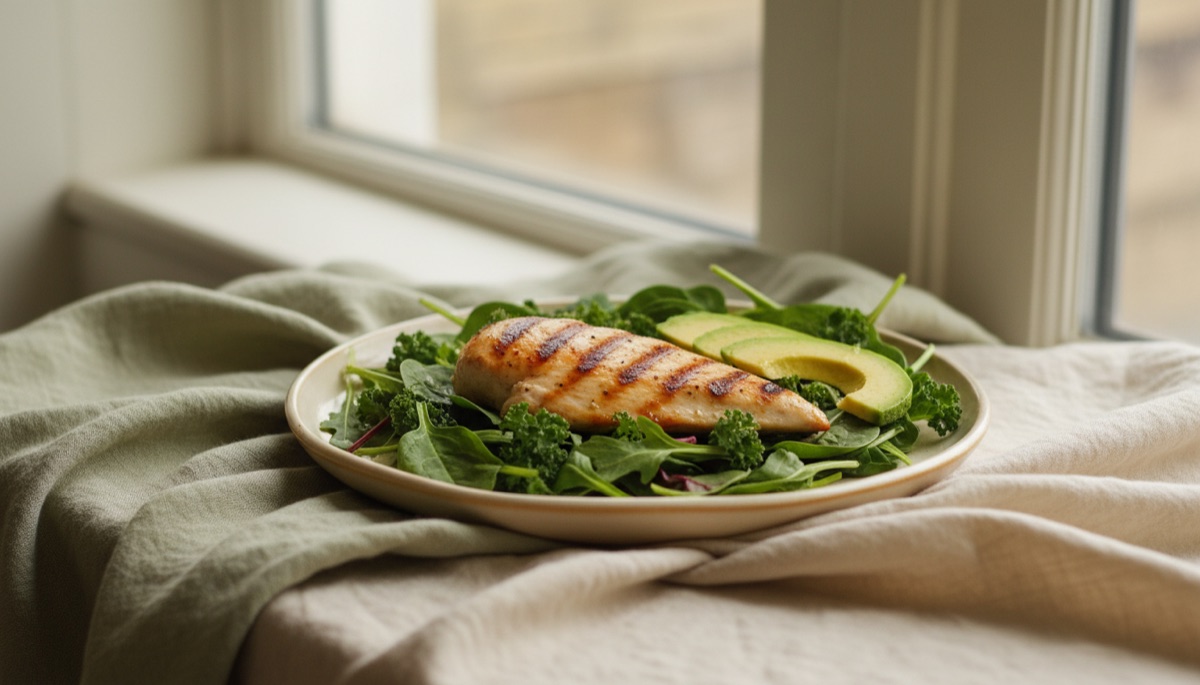
What patients consistently report, and what dietitians working with GLP-1 patients tend to suggest: smaller portions, eaten slowly; lean proteins (chicken, fish, eggs, Greek yogurt, tofu); cooked vegetables over raw; warm or cold foods rather than very hot; and plenty of water between (not during) meals. Heavy, fatty, or deep-fried foods are the most commonly reported triggers for nausea and sulfur burps. Highly processed sugar often becomes unpleasant even if it was a favorite before.
Should I worry about micronutrients?
Reduced food intake can mean reduced intake of iron, B12, vitamin D, calcium, and fiber. None of the GLP-1 labels require supplementation, but many clinicians suggest a multivitamin on days when intake is below about 1,200 calories, and bloodwork at 6 months to check iron and B12. A registered dietitian can tailor this to your specific eating pattern. General multivitamins are fine; megadose supplements are not recommended without bloodwork showing a deficit.
What about electrolytes?
When total food and fluid intake drops, sodium, potassium, and magnesium intake drops too. That's a common cause of the first-month fatigue and light-headedness people describe. Broth, salted nuts, olives, and a low-sugar electrolyte mix (LMNT, Redmond Re-Lyte, and Needed Electrolytes are three that patients commonly mention) are all reasonable options. The drug doesn't directly deplete electrolytes. Reduced eating does.
Can I use protein powder?
Yes, and many people need to. When food volume is small, protein density matters. A whey or whey-casein blend with 25-30g per scoop (Klean Athlete, Needed, Momentous, Promix, Optimum Nutrition, and Truvani all have versions that come up in patient discussions) mixed into water or milk tends to go down easier than a full meal on a nauseous day. Plant-based options (pea, rice, Orgain's blend) are an option if dairy isn't tolerated.
Is resistance training really necessary?
The lean-mass data from STEP-1 (roughly 39% of lost weight as lean mass) and SURMOUNT-1 (roughly 25%) is the clearest reason clinicians now suggest resistance work alongside a GLP-1. You don't have to lift heavy. What the sports medicine literature supports: 2-3 sessions per week of compound movements (squats, rows, presses, deadlift variants), enough to create meaningful stimulus. Protein plus load is the combination the evidence keeps pointing to for preserving muscle during weight loss.
Sources
Related reading
Best Protein Powders for GLP-1 Users
The protein powders that fit a 30g-per-scoop target, sit well on a slow-emptying stomach, and don't rely on artificial sweeteners readers don't want.
How Much Protein Do You Actually Need on a GLP-1?
The target range (1.2-1.6g per kg body weight), why it matters for muscle preservation, how to hit it on a shrunken appetite, with worked examples.