On this page
What this guide covers
Ein Teil des Gewichts, das Sie unter Semaglutid (Ozempic, Wegovy) verlieren, ist Muskelmasse, nicht Fett. Hier erfahren Sie, was die Studien tatsächlich zum Verlust an magerer Masse unter einem GLP-1 zeigen, warum das passiert und welche zwei Gewohnheiten Ihre Muskeln am stärksten schützen. This is patient education, not a substitute for the prescriber who knows your case. Generic names sit next to brand names throughout: semaglutide (Ozempic, Wegovy), tirzepatide (Mounjaro, Zepbound).
Key points
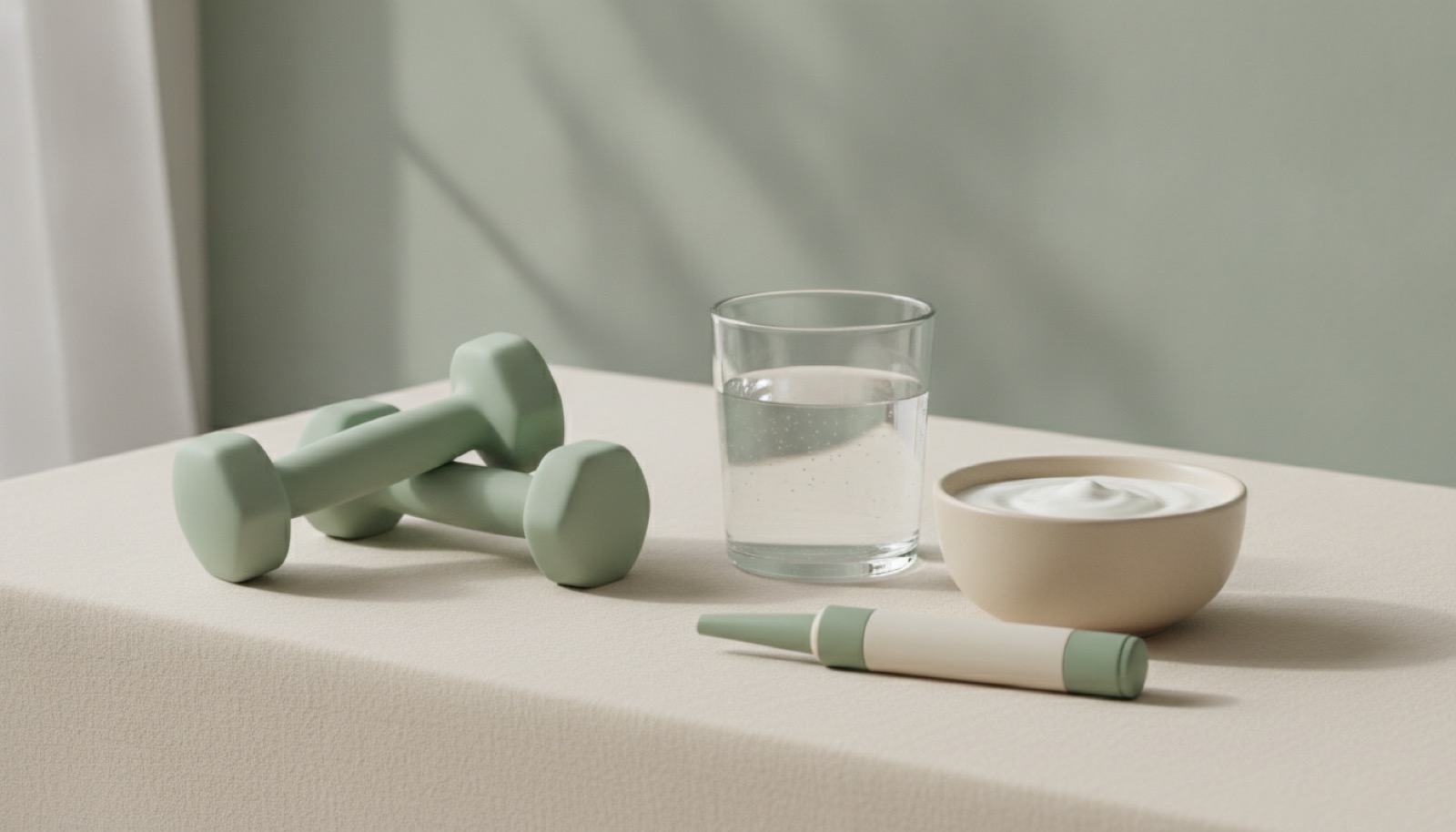
- Die kurze Antwort: ja, ein Teil des Verlusts ist Muskel. Wenn Sie unter einem GLP-1 abnehmen, ist nicht alles davon Fett. Ein Teil dessen, was verloren geht, ist magere Masse, zu der auch Muskel zählt. Das ist nicht spezifisch für Semaglutid (Ozempic, Wegovy) oder Tirzepatid (Mounjaro, Zepbound); es geschieht bei jeder schnellen Gewichtsabnahme, auch durch Ernährung allein. Anders ist hier nur das Tempo und das Ausmaß des Verlusts, den diese Medikamente bewirken, was zum Teil erklärt, warum das Thema so viel Aufmerksamkeit bekommt. Beruhigend ist: Der Verlust an magerer Masse ist nicht in dem Sinne unvermeidlich, dass er unkontrollierbar wäre. Die zwei Gewohnheiten weiter unten, ein realistisches Eiweißziel zu erreichen und Krafttraining zu machen, sind beide belegt, und keine erfordert eine Mitgliedschaft im Fitnessstudio oder ein Präparat, das Sie kaufen müssen.
- Was die Studien tatsächlich gemessen haben. Die Zahlen, die genannt werden, stammen aus Teilstudien zur Körperzusammensetzung der großen Studien. In einer Teilstudie der STEP-1-Studie zu Semaglutid waren vom gesamten verlorenen Gewicht etwa 39 Prozent magere Masse und der Rest Fett. In der SURMOUNT-1-Studie zu Tirzepatid lag der berichtete Anteil magerer Masse am Gesamtverlust niedriger, bei etwa 25 Prozent. Zwei Dinge sind hier wichtig festzuhalten. Erstens ist es zu erwarten, etwas magere Masse zu verlieren, während man viel Gewicht verliert, und das ist nicht dasselbe wie ein Schwund Ihrer Muskeln; Menschen verlieren mageres Gewebe auch aus Organen und über Flüssigkeit, nicht nur Skelettmuskulatur. Zweitens kann selbst ein normaler Prozentsatz eine bedeutende absolute Menge sein, weil der Gesamtverlust groß ist, und genau deshalb lohnt sich der Schutz.
- Warum ein GLP-1 Muskelabbau wahrscheinlicher macht. Der Mechanismus ist nicht, dass das Medikament den Muskel direkt angreift. Es ist, dass das Medikament Ihren Appetit so wirksam dämpft, dass Eiweiß, der Nährstoff, den Ihr Körper braucht, um Muskeln zu erhalten und aufzubauen, oft als Erstes zu kurz kommt. Wenn Sie ein Drittel dessen essen, was Sie früher gegessen haben, überleben meist die einfachen Kalorien (Toast, Cracker, ein paar Bissen Nudeln), während Steak, Eier und griechischer Joghurt ausgelassen werden, weil sie schwer wirken. Hinzu kommt, dass viele Menschen sich weniger bewegen, wenn sie weniger essen und die frühe Müdigkeit spüren, und schon haben Sie das klassische Rezept für Muskelabbau: wenig Eiweiß plus wenig Bewegung während eines starken Kaloriendefizits. Beide Hälften dieses Rezepts können Sie ändern.
- Eiweiß: der wichtigste Hebel. Die am besten belegte Gewohnheit zum Erhalt magerer Masse während der Gewichtsabnahme ist, genug Eiweiß zu essen. Ein Ziel, das viele Ärztinnen und Ärzte verwenden, liegt bei etwa 1,2 bis 1,6 Gramm Eiweiß pro Kilogramm Körpergewicht pro Tag, und manche tendieren für GLP-1-Nutzerinnen gezielt zum oberen Bereich, weil der Verlust schnell geht. Der Trick bei geringem Appetit ist, das Eiweiß zuerst zu essen, vor den Kohlenhydraten und dem Gemüse, sodass die Bissen, die am meisten zählen, die sind, die Sie auch tatsächlich gegessen haben, falls Sie nach ein paar Bissen satt werden. Flüssiges und weiches Eiweiß (ein Shake, griechischer Joghurt, Hüttenkäse, Eier) geht hinunter, wenn ein voller Teller nicht mehr geht. Wenn Sie die ausführliche Aufschlüsselung möchten, inklusive Rechenbeispielen nach Körpergewicht, deckt unser Eiweiß-Leitfaden sie ab.
- Krafttraining: der zweite Hebel. Die andere gut belegte Gewohnheit ist Krafttraining, also Gewichte heben, mit Bändern arbeiten oder Übungen mit dem eigenen Körpergewicht, zwei- bis dreimal pro Woche. Krafttraining signalisiert Ihrem Körper, Muskeln zu halten, selbst während er Fett verliert, weshalb die Kombination aus ausreichend Eiweiß und konsequentem Training in der Forschung zur Gewichtsabnahme jede der beiden Maßnahmen für sich übertrifft. Es muss nicht schwer oder lang sein. Zwei kurze Einheiten pro Woche, die die großen Muskelgruppen ansprechen (Beine, Rücken, Brust, Rumpf), bewegen etwas. Ausdauertraining und Spazierengehen sind aus anderen Gründen gut für Sie, aber sie schützen die Muskeln nicht so wie Krafttraining. Wenn Sie keinen Hunger und wenig Energie haben, fangen Sie klein an und trainieren Sie eher gegessen als nüchtern.
Frequently asked questions
Verursacht Ozempic Muskelabbau?
Ein Teil des unter Semaglutid (Ozempic, Wegovy) und Tirzepatid (Mounjaro, Zepbound) verlorenen Gewichts ist magere Masse, zu der auch Muskel zählt, doch das gilt für jede schnelle Gewichtsabnahme und ist kein spezifischer Arzneimitteleffekt. In einer Teilstudie zur Körperzusammensetzung der STEP-1-Studie waren etwa 39 Prozent des gesamten verlorenen Gewichts magere Masse; in SURMOUNT-1 lag der berichtete Anteil niedriger, bei etwa 25 Prozent. Das Medikament greift den Muskel nicht direkt an; der Verlust wird durch das starke Kaloriendefizit und die geringe Eiweißzufuhr getrieben, die einem stark gedämpften Appetit folgen.
Wie viel Muskel verliert man unter einem GLP-1?
Das schwankt je nach Person und Studie, aber Teilstudien zur Körperzusammensetzung verorten den Anteil magerer Masse am Gesamtverlust irgendwo zwischen etwa einem Viertel und rund 39 Prozent (SURMOUNT-1 etwa 25 Prozent, STEP-1 etwa 39 Prozent). Da der Gesamtverlust unter diesen Medikamenten groß ist, kann selbst ein normal klingender Prozentsatz eine bedeutende absolute Menge sein. Ausreichend Eiweiß und Krafttraining verschieben beide mehr vom Verlust hin zu Fett und weg von Muskel.
Wie verhindere ich Muskelabbau unter Ozempic?
Zwei Gewohnheiten sind am besten belegt. Erstens genug Eiweiß essen, ein Ziel, das viele Ärztinnen und Ärzte verwenden, liegt bei etwa 1,2 bis 1,6 Gramm pro Kilogramm Körpergewicht pro Tag, wobei Sie das Eiweiß auf Ihrem Teller zuerst essen, damit es einen geringen Appetit übersteht. Zweitens zwei- bis dreimal pro Woche Krafttraining (Gewichte, Bänder oder Übungen mit dem eigenen Körpergewicht). Die Kombination erhält mehr magere Masse als jede Maßnahme für sich. Ausdauertraining und Spazierengehen sind gesund, schützen die Muskeln aber nicht auf dieselbe Weise.
Wie viel Eiweiß sollte ich essen, um Muskeln zu schützen?
Ein häufig verwendetes Ziel liegt bei etwa 1,2 bis 1,6 Gramm Eiweiß pro Kilogramm Körpergewicht pro Tag, wobei manche Ärztinnen und Ärzte für GLP-1-Nutzerinnen den oberen Bereich bevorzugen, weil die Gewichtsabnahme schnell geht. Für eine Person mit 70 kg sind das etwa 84 bis 112 Gramm pro Tag. Bei geringem Appetit beginnen Sie jede Mahlzeit mit Eiweiß und greifen an Tagen, an denen ein voller Teller unattraktiv ist, auf flüssige oder weiche Quellen zurück (ein Shake, griechischer Joghurt, Hüttenkäse, Eier). Unser Eiweiß-Leitfaden enthält Rechenbeispiele nach Körpergewicht.
Kommt der Muskel nach dem Absetzen eines GLP-1 zurück?
Muskel lässt sich mit Krafttraining und ausreichend Eiweiß wieder aufbauen, so wie jeder verlorenen Muskel zurückgewinnt, aber er kehrt nicht automatisch zurück, nur weil Sie das Medikament absetzen. Tatsächlich begünstigt die erneute Zunahme nach dem Absetzen eher Fett, sofern Sie nicht weiter trainieren. Die praktischere Botschaft ist, den Muskel während der Gewichtsabnahme zu schützen, wenn es leichter ist, ihn zu halten, als ihn später wieder aufzubauen. Besprechen Sie jeden Plan zum Absetzen oder Ändern Ihres Medikaments mit Ihrer verordnenden Ärztin oder Ihrem verordnenden Arzt.
Brauche ich Präparate oder Proteinpulver, um Muskeln zu behalten?
Nicht zwingend. Wenn Sie Ihr Eiweißziel über die Nahrung erreichen und Krafttraining machen, sind Präparate optional. Proteinpulver ist eine Erleichterung, keine Voraussetzung, an Tagen mit geringem Appetit, an denen eine volle Mahlzeit schwerfällt, aber durchaus nützlich. Kreatin hat eine lange Sicherheitsbilanz und eine moderate Evidenz zur Unterstützung von Kraft und magerer Masse, daher ist es etwas, das man vernünftigerweise besprechen kann, aber es ist nicht unverzichtbar. Die Grundlagen, genug Eiweiß und konsequentes Krafttraining, leisten den größten Teil der Arbeit.
Sources
Related reading
GLP-1 Nutrition Guide: Protein & What to Eat
Protein targets, muscle preservation, electrolytes, micronutrients, and sample days of eating. The practical food companion for life on a GLP-1.
Best Protein Powders for GLP-1 Users
The protein powders that fit a 30g-per-scoop target, sit well on a slow-emptying stomach, and don't rely on artificial sweeteners readers don't want.
How Much Protein Do You Actually Need on a GLP-1?
The target range (1.2-1.6g per kg body weight), why it matters for muscle preservation, how to hit it on a shrunken appetite, with worked examples.